
· News
10 Years of DNMO
A decade after our founding in The Hague, we return to the music that started it all.
In November 2016, I founded Das Neue Mannheimer Orchester in The Hague. We began with the music of the Mannheim court. Ten years on, the orchestra has grown and changed a great deal, and we’re returning to that music to begin our anniversary celebrations.
Above all, this anniversary is a chance to thank everyone who has been part of the orchestra’s life. To every musician who has played with us, whether for a single project or over many years: thank you for the artistry, curiosity and commitment you have brought to our work. Your ideas and personalities have helped shape the orchestra, and the friendships, conversations and discoveries along the way have meant a great deal to me personally.
We also want to thank our collaborators, hosts, organisers and supporters, and everyone who has come to a concert, listened to a recording or shared our music with others. So much happens beyond the stage to make a project possible, often through efforts that go unseen. We are deeply grateful for that work, for the trust you have placed in us, and for the encouragement you have given us to keep exploring.
Looking ahead, we want to develop new projects and partnerships around the world, exploring less familiar repertoire and bringing new ideas for concerts, recordings and artistic collaboration to life. There is still so much we want to discover and try. We hope to work with new people, reach new audiences, and create opportunities to bring musical research and experimentation into the shared experience of performance.
If you would like to be part of what comes next, we would love to hear from you—whether you have an idea for a collaboration, an introduction to make, practical help to offer, or a wish to support a future project. These connections can make a real difference to what we are able to undertake.
Thank you for ten years of music, friendship and discovery. We look forward to celebrating with you, and to everything we might make possible together.
Sincerely,
Anders Muskens
Founder & Director
The Mannheim School
In the mid-eighteenth century, the composers and players of Elector Carl Theodor’s court orchestra developed a style that helped shape the Classical symphony. Under Johann Stamitz (1717–1757) and his successor Christian Cannabich (1731–1798), the orchestra became known for its precision and dramatic shifts in volume. Its signature was the Mannheim crescendo, when the whole orchestra builds from quiet to loud. Composers at the court also gave the winds more independent parts, so they could answer the strings and bring new colours to the music.
Cannabich was a Mannheim-born violinist and composer who studied with Stamitz and went on to lead the same court orchestra. His music has become a thread through our own work, from the symphony we recorded for Army of Generals, Volume II to the ballets Ceyx et Alcyone and Médor et Angélique.
We chose the opening Allegro of his Symphony No. 51 in D major to begin the anniversary series because it lets you hear the sound that drew us to Mannheim in the first place. Listen about 25 seconds in as the whole orchestra builds the crescendo together.
You can find the complete symphony on Army of Generals, Volume II and browse all our albums in the DNMO discography.
Cannabich on the stage
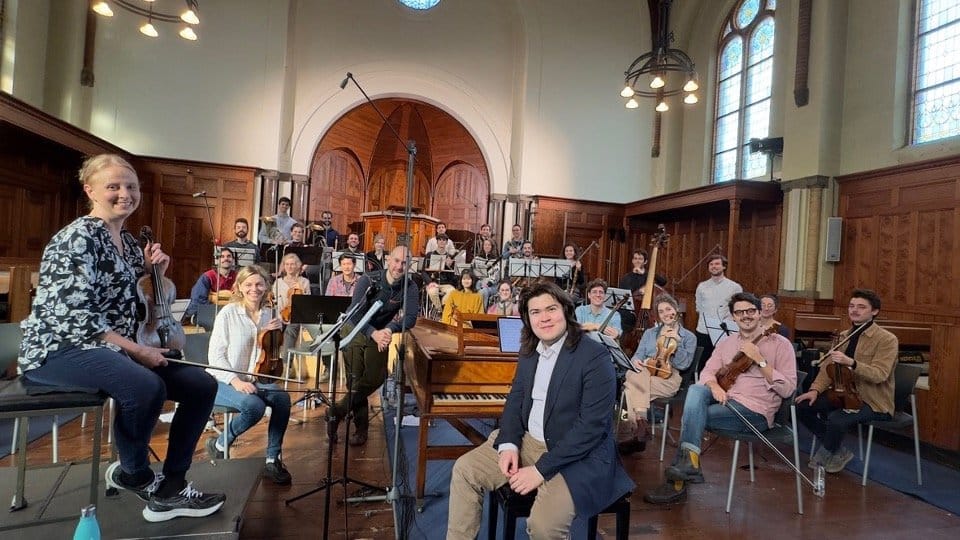
We recorded these five excerpts live at Westvest 90 in Schiedam on 23 October 2024. In the ballets, Cannabich uses changes of tempo, dance rhythms and orchestral colour to tell a story.
Ceyx et Alcyone
Cannabich’s ballet draws on Ovid’s tale of Ceyx and Alcyone. In our recording, João Luís Veloso Paixão narrates the story in French. Hear the complete ballet on Army of Generals, Vol. 3.
XIV. Allegro, Adagio, Allegro, Narration and Andante. As Ceyx’s ship leaves port, quick music gives way to an Adagio before the Allegro returns. Listen for how the change of pace and the spoken narration carry the story forward.
XVIb. Chaconne. The closing dance comes as Ceyx and Alcyone are transformed into birds. Listen for the steady dance pulse after the shifting tempos of the earlier scene.
Médor et Angélique
Drawn from Ariosto’s Orlando Furioso, the ballet follows the lovers Médor and Angélique and Roland’s descent into fury. Hear the full recording on Médor et Angélique ou Roland Furieux.
XV. Allegro non troppo. This movement comes near the end of the lovers’ time together. In our performance it leads into the narration as Angélique begins to think about leaving.
IV. Un poco allegro. This earlier dance follows the narration describing Médor restored to health. We hear it as the story turns from Angélique tending his wounds to Médor falling in love.
XXIV. Chaconne. Late in the ballet, this dance follows an Andante grazioso. Listen to it alongside the chaconne from Ceyx et Alcyone to hear how Cannabich uses the same dance form in two different stories.
From our archive
We’re posting new videos and reels from our archives as we look back on the orchestra’s first decade. Follow us on YouTube, Instagram and Facebook to see what we’re sharing over the coming weeks.
Thank you to everyone who has played with us and everyone who has listened over these ten years.
Anders Muskens